
the founding of Wellfleet Communications
The five founders of Wellfleet – Paul Severino, David Rowe, Bill Seifert (me), Steve Willis, and Jennifer Lamonaikis – had all worked with one another at InterLAN at its original offices in Chelmsford, MA beginning in 1981. Following the acquisition of InterLAN by Micom Systems in early 1985, many of the original InterLAN employees began leaving the company. One day, Dave Rowe called me and asked if I would mind having lunch with he and Paul, they wanted to discuss a business idea. Of course I said yes, why not?
Over sandwiches, Paul outlined his concept for an industrial automation startup company and what he had learned about the market. He was convinced that another IEEE local networking standard, 802.4 token bus, would dominate industrial automation in the near future. The rapid adoption of robotics by large automotive corporations would drive the need for industrial-grade local networks on the factory floor, so Paul believed, and therefore there would be an opportunity for a startup company to lead the market. He had recently attended a factory automation trade show in Detroit, and was enthused by what he saw and heard.
I resigned from Micom in November, 1985, and informed Paul and Dave that I would help them with the business and product planning. Later, Alan Wallach came on as the marketing head, and Steve Willis also left Micom to assist in defining the product concept and engineering plan. We spent over four months researching the market opportunity, investigating applicable technologies, kicking around product concepts, and talking to a few local startups who were in other areas of industrial automation. We produced a pretty comprehensive business plan under the name “Aurora Systems” which was based on developing a general purpose computing platform that would be deployed on factory floors as a “cell controller”.
A “cell” was defined as the basic building block for implementing a set of discrete manufacturing tasks within a factory, e.g., installing complete instrument panels and wiring harnesses in an automobile. A set of programmable robots would perform the various steps required to install the instrument panel, connecting the instruments to the vehicle’s wiring harness, performing a variety of tests to validate the completed assembly, then moving the vehicle on to the next cell. The cell controller would download the appropriate software instructions and data sets to each robot, execute the functional tests, record and communicate the results to a set of supervisory computers and their human operators.
Steve and I thought that we could design and implement a “distributed real-time operating system” over the 802.4 token bus network that would allow the designers of cell controller applications to build systems on distributed software components. Roughly, we were convinced that the deterministic performance of 802.4 would support “real-time” software tasks distributed across the factory floor.
At InterLAN, Jon Taylor had designed and implemented an operating system kernel that he called “COMET – communications executive for the transport layer” – that we believed could be extended to operate over the token bus network that presumably would connect each cell controller within a factory.
By this time, we thought that we were almost ready to pitch our plan to a few venture capitalists. Before we did, however, we wanted to describe the product concept to some prospective customers or potential partners to get their feedback. One of our first such meetings was with a local robotics manufacturer in Billerica, Mass. Paul and I sat across the desk from the company’s CEO one afternoon, outlining our views of the market, product concept, time-to-market window, etc. At one point, he interrupted, making the observation, “You know, this is a tough market. General Motors doesn’t pay their bills.” Paul and I looked at one another, silently communicating “holy isht, we are doomed!”
Paul and I returned to our offices that afternoon and described our meeting with the CEO of the Billerica robotics startup to the others. Reluctantly, we concluded that Aurora Systems was never going to get off the ground. We had spent over four months working on a business plan for a company that had no chance of succeeding. It was mid-April, 1986. My wallet was getting thinner with each passing day. I needed to find a job, asap. Or we had to come up with another business idea that was fundable by venture investors, quickly. We agreed to regroup the next day, even if it meant that we had to clean out our offices. I left that day more discouraged than I had felt in a very long while.
Everyone came into the office late the next morning. We all gathered in Paul’s office, he said that he had some good news. A Boston venture capitalist had called him the previous evening asking that we take a look at a troubled startup company near Nashua, New Hampshire. The company, Wolfe Data, had been founded by some former employees of Digital Equipment. It was their first startup company, they were struggling, and he asked Paul if he/we were interested in taking it over. We briefly discussed what to do, the Boston vc wanted us to visit them that day. We divvied up the tasks of due diligence, jumped into a pair of cars, and drove to New Hampshire.
We had initially decided that we would spend the day at Wolfe Data, interviewing management and the employees, assessing their product’s design and development, sales, customers, etc. We were finished by noon. The drive back to the office in Lexington would take us past a restaurant in Billerica, the Manning Manse, so we agreed to meet there for lunch.
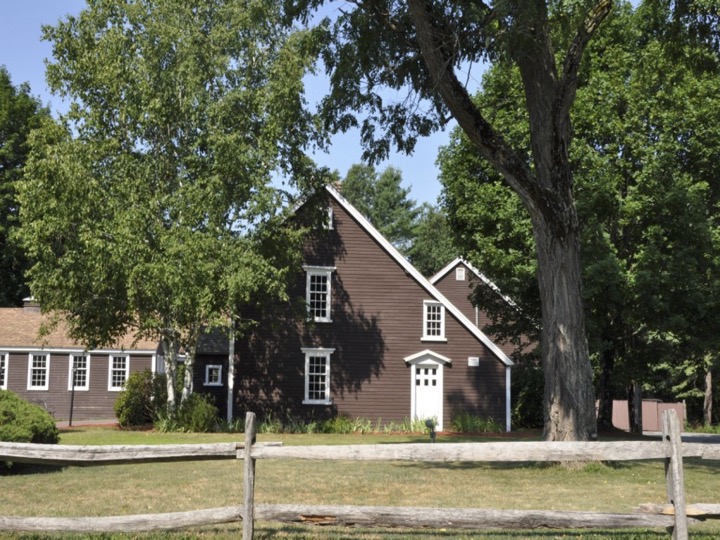
The restaurant at that time served traditional American fare in a white tablecloth, early colonial setting. We were all seated around a large round table, so that it was possible to see practically everyone’s facial expressions. The discussion about Wolfe Data began with Paul and Dave describing the state of the company’s finances, focusing on the cash burn rate which was completely out of line with respect to sales and collections. It was obvious that senior management was paying themselves generously from their investors’ capital. Next, Steve and I outlined the state of their initial product offering, a low-cost gateway which provided access to an X.25 data network from an enterprise computer. It was clear to both of us that the engineering manager, a former DEC hardware engineer, was particularly impressed with his major technical contribution – “I improved DEC’s Qbus!” – Steve and I, not so much. We concluded that there was only one engineer who was still employed by the company that should remain if we were to assume management control.
There was no enthusiasm around the table for taking over Wolfe Data. A somber pall descended over all of us. After a few moments, I blurted out “Well, I think we could start our own data communications company, making our own stupid mistakes rather than trying to fix someone else’s!”
Paul replied, “Doing like what?”
I said, “How about multi-protocol routing and bridging?”
Paul said, “What the hell is that?”
I looked at Steve and said “Type field sorting”.
Steve and I had worked with Jon Taylor at InterLAN in writing a device driver for VAX/VMS that would allow DECnet and TCP/IP to run simultaneously on DEC VAX/VMS machines. To allow that to happen, we needed a way to separate received Ethernet frames that contained different higher level protocols like DECnet and IP. Fortunately, the designers of the Ethernet specification had provided for this exact capability by the inclusion of a “type field” – a 16-bit value that was unique for each protocol. We had done this driver at the request of Stu Wecker, an architect of DECnet, who at the time was the CEO of TCI, Technology Concepts Inc. Later, we would hire Bob Doyle from TCI who would become Wellfleet’s DECnet routing architect and implementor. One of Wellfleet’s enabling technologies had been already been implemented at InterLAN.
So, we all left the Manning Manse and returned to our borrowed office space in Lexington on Hartwell Ave. Steve and I spent the afternoon sketching out what we could do with the type field sorting idea, speculated about the types of products that we could create, but soon realized that we didn’t really know enough about the market to come up with a good, first product to design. We did know a number of customers from our previous experiences at InterLAN and their applications, network topologies, protocols utilized, etc that we were confident that we could define a first viable product in a relatively short amount of time.
We put together a few slides that summarized what we did know about customer needs, the products and technologies that they were currently using. Jennifer made some airline reservations for us to visit ABS Ventures (a unit of Alex Brown & Sons, the investment banking firm) in Baltimore to discuss our idea with Ed Anderson and a few of his partners. Our day-trip on April 28, 1986, got us an audience with Ed, Bruns Greyson, John Fisher, and Art Rydell. Evidently we were convincing enough to persuade ABS to write a check for seed money that would allow us to write a business plan, pay some bills, and give us time to raise a Series A investment round from venture capitalists.
The initial business plan for our startup venture was completed in 35 days from product inception to the proverbial handshake on the first round financing (April 24 – May 29, 1986). Our place-holder name for the company was “PerCom”, short for “Performance Communications”. From the very beginning, one of our objectives was to design and build products characterized by high performance, a goal that we failed to realize in the first iterations of products, but did eventually attain.
One of the driving forces of our thinking at the time was the sudden emergence of then-high speed wide area networking in the form of digital T-1 service from the newly formed “RBOCS (Regional Bell Operating Companies) following the court-mandated breakup of AT&T. The price of a single leased T-1 circuit declined in a matter of months from several thousands of dollars per month to a few hundred. We realized that the T-1 data rate of 1.5Mbps represented an enabling technology that would allow for the transparent interconnection of geographically disbursed LANs at a cost affordable by most Fortune 1000 corporations. The notion of multi-protocol bridging and routing over distance at comparatively low cost was now possible by sorting protocol types, making independent forwarding decisions, and selecting appropriate paths within a dedicated, high-performance microprocessor-based system. We thought that we could position the company to become one of the market leaders in this segment of the data communications industry.
Here is the executive summary from the original “PerCom” business plan, again courtesy Steve Willis:
Executive Summary
PerCom is being formed by an experienced group of local area network industry executives to create a major data communications company which designs, manufactures, sells, and supports high performance, reliable, easily installed interconnect products for local area networks.
• Major means nearly $40 million in revenue in 5 years
• Designs, manufactures, sells, and support includes engineering design and development, manufactures product sold by a distributor sales force and direct OEM sales group to both OEM’s and end users, with home office based support organization.
• High performance means providing transparent interconnections for LAN to LAN as well as LAN to WAN based connections utilizing available services and near term future services.
• Reliable means providing a highly available interconnect service utilizing automatic detection of faults and rerouting capabilities.
• Easily installed means installation and configuration by distributors, OEMs, and end user personnel. Maintenance and diagnostic services provided via remote links by factory resident support personnel.
The market opportunity is based on the growth of local area networks and the need for network interconnects in a number of configurations including:
• LAN interconnect for traffic separation
• LAN interconnect for physical extension
• Interconnection of dissimilar LANs
• Interconnection of geographically dispersed LANs
• Interconnection of LAN to VAN (Value-Added Networks)
Local area networks are the fastest growth area in the data communications industry with rates in the 50% per year range for the forseable future. Industry projections put the number of LANs installed, excluding PC LANs, by 1990 in excess of 115,000. It is our belief that between 20-25% of these networks will require wide area interconnection and 35-40% will require local interconnection. The size of this market in 1990 will be in excess of $500 million.
PerCom’s product strategy is to provide bridges, routers, and gateways having major advantages in these areas:
• Concurrent support of multiple LAN types and protocols
allowing users to interconnect in a transparent fashion their multivendor LAN environments.
• High packet thruput capabilities for connection of heavily loaded networks and full utilization of T1 circuits.
• Network auto routing capabilities
• Backup capabilities
• Network Management
PerCom’s initial sales strategy is to sell to the user of high performance LAN based systems in the scientific, engineering and industrial computing markets. Focused OEM selling will be accomplished by a corporate based high level selling team. Wide distribution of the product line will be accomplished by a network of experienced data communications distributers. The company will promote its products through:
• Advertising into focused market segments
• Technical articles
• Handbook of LAN interconnect
-distributed by the company
-distributed via industry wide mailer
• Highly visible trade show presence
-multiple technical sessions
-demonstrate solutions
• Distributor sponsored tutorial user seminars
The company’s first product, DATAGATE, will perform the functions of a learning bridge and a router in a single package. This product will support Ethernet LANs, TCP/IP protocols, and 56kb and T1 wide area links. Beta test is scheduled for month 11 after start up with year 2 revenues projected to be in the $2 million range. Significant growth is expected as the company signs OEM accounts and brings its distributor sales channel to productivity.
The founding group consists of seasoned executives in the areas of operations, strategy, and local network technology. Additional senior talent will be added in marketing and wide area networking technology.
Any business plan for a technology startup that is drafted in slightly over a month’s time is bound to be seriously flawed. While we all had our heads down producing our plan of over 11,000 words in 46 pages, there were a number of things that were not getting done. One, we did not recruit a sales and marketing executive to become part of the founding team (Alan Walach left after we decided to trash the Aurora Systems business plan); and two, we had not identified any engineers that would be responsible for developing the company’s initial products. This meant that no one was focused on developing a complete list of product requirements appropriate for our first-generation product offerings; and that the engineers expected to deliver them had no input into the product development plan, never mind any sense of commitment to making it all happen.
However, that flawed plan turned out to be good enough to convince Russ Planitxer (J.H. Whitney, InterLAN’s first investor) and Ed Anderson (ABS Ventures, a late round investor in InterLAN) to agree to a Series A investment of $2.7M. We all performed the ritual handshake at J. H. Whitney’s offices in New York City on May 29, 1986.
Of course we were all elated at achieving this first significant milestone. But Steve and I were more than a little anxious about finding the engineering talent that we needed immediately. We knew that it would be very difficult to recruit our core developers over the summer, so we needed an assist. We also knew that we wanted to create a company culture that was distinct and different from any other company that we had worked in, including InterLAN. We had a different mission to fulfill, requiring people with a unique blend of skills, possessing a degree of resilience beyond anything that we had ever experienced. As I later suggested to several engineers, we were about to embark on a long submarine cruise without any soap on board. We had little time to assemble our crew.

 behind the towers
Leave a comment